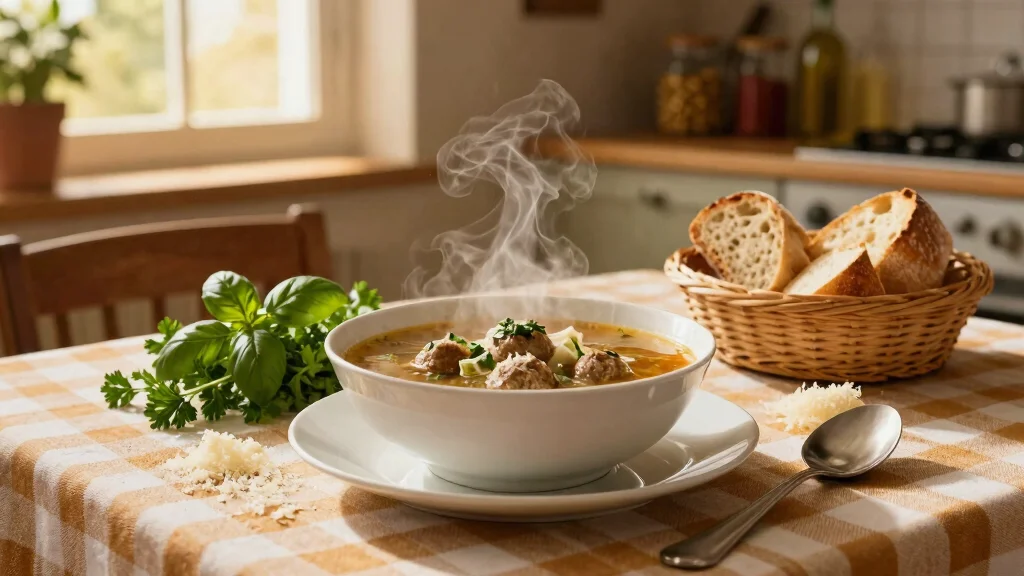

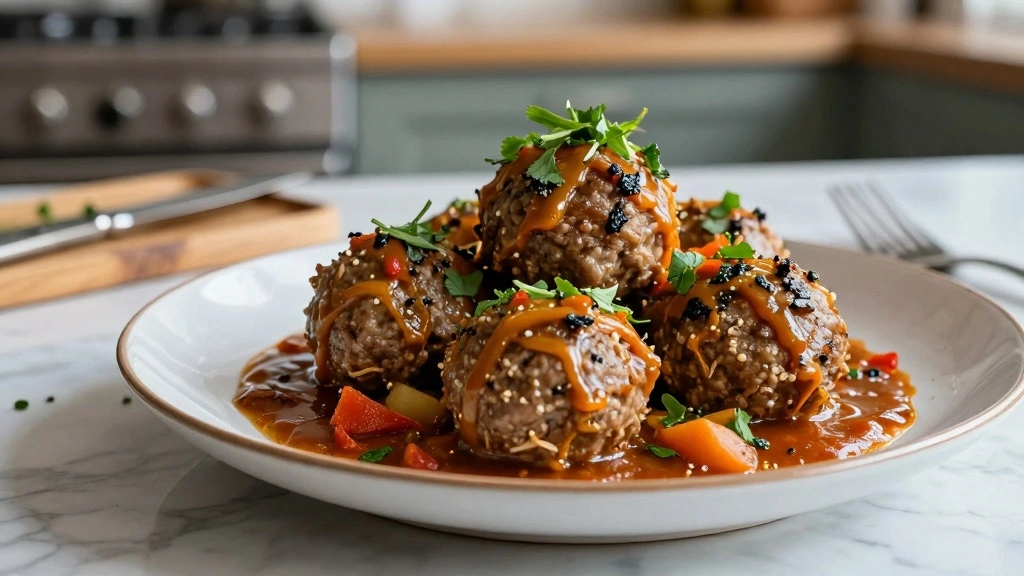
This classic Italian Meatballs Recipe brings together centuries of culinary tradition with modern techniques to create a dish that’s both comforting and elegant.
The harmonious balance of savory beef, aromatic herbs, and a rich tomato sauce creates a memorable dining experience that will have everyone asking for your secret.
I discovered this recipe through my grandmother, whose culinary expertise was honed in the kitchens of Sicily.
Whether you’re preparing a casual family dinner or hosting a special celebration, these meatballs deliver impressive results with straightforward preparation.
The History and Cultural Significance
• Italian Meatballs Recipe traces its origins to Southern Italy, where it was originally created by home cooks using available ingredients to stretch meals.
• The dish evolved over decades as tomatoes were introduced, and techniques like slow simmering improved flavor and texture.
• In Italian culture, this dish traditionally appears at family gatherings and Sunday dinners, symbolizing warmth and hospitality.
• While many variations exist across different regions, the authentic version maintains the delicate texture and vibrant flavor that sets it apart from imitations.



Recipe Overview
Nutritional Information (per serving)
Essential Equipment Guide
Large Mixing Bowl: Essential for combining ingredients thoroughly without making a mess. A stainless-steel bowl is preferable for easy cleaning and durability.
Cast-Iron Skillet: Important for achieving the perfect sear on meatballs. Alternatives like non-stick pans work, but a cast-iron skillet retains heat better, giving a superior crust.
Immersion Blender: Useful for creating a smooth tomato sauce directly in the cooking pot. A regular blender can be used, but an immersion blender simplifies the process with less cleanup.
Ingredients
For the Meatballs
|
| Amount | Ingredient | Notes |
|---|---|---|
| 500 grams | ground beef | adds richness |
| 1 cup | breadcrumbs | helps bind the meatballs |
| 2 large | eggs | for binding |
| 1 teaspoon | salt | enhances flavor |
| 1 teaspoon | black pepper | adds a subtle heat |
| 1 tablespoon | parsley, chopped | adds freshness |
For the Sauce
| Amount | Ingredient | Notes |
|---|---|---|
| 2 tablespoons | olive oil | for sautéing |
| 1 medium | onion, chopped | adds sweetness |
| 3 cloves | garlic, minced | adds depth |
| 2 cups | canned tomatoes | for the base of the sauce |
| 1 teaspoon | oregano | adds an earthy aroma |
| 1 teaspoon | basil | adds a sweet, aromatic flavor |




Preparation Methods
Mixing Meat: Gently combine ingredients using your hands to avoid overworking the mixture, which can lead to tough meatballs. Mastery of this technique ensures light and tender meatballs.
Searing Meatballs: This technique involves browning the meatballs on high heat before simmering them in sauce. It locks in juices and enhances flavor. Practice maintaining medium-high heat for best results.
Simmering Sauce: Slow-cook the sauce to develop deep flavors. Keep the heat low and stir occasionally to prevent sticking. This method allows flavors to meld beautifully.




Step 1: Prepare Ingredients

Gather all ingredients and equipment listed.
Chop the parsley and onion, and mince the garlic.
Measure out each ingredient to ensure smooth preparation.
Have all ingredients ready to streamline the cooking process.


Step 2: Mix Meatball Ingredients

In a large mixing bowl, combine the ground beef, breadcrumbs, eggs, salt, pepper, and parsley.
Use your hands to gently mix until just combined.
Avoid overmixing, as this can make the meatballs dense.
The mixture should be moist but hold together easily.
Step 3: Form Meatballs
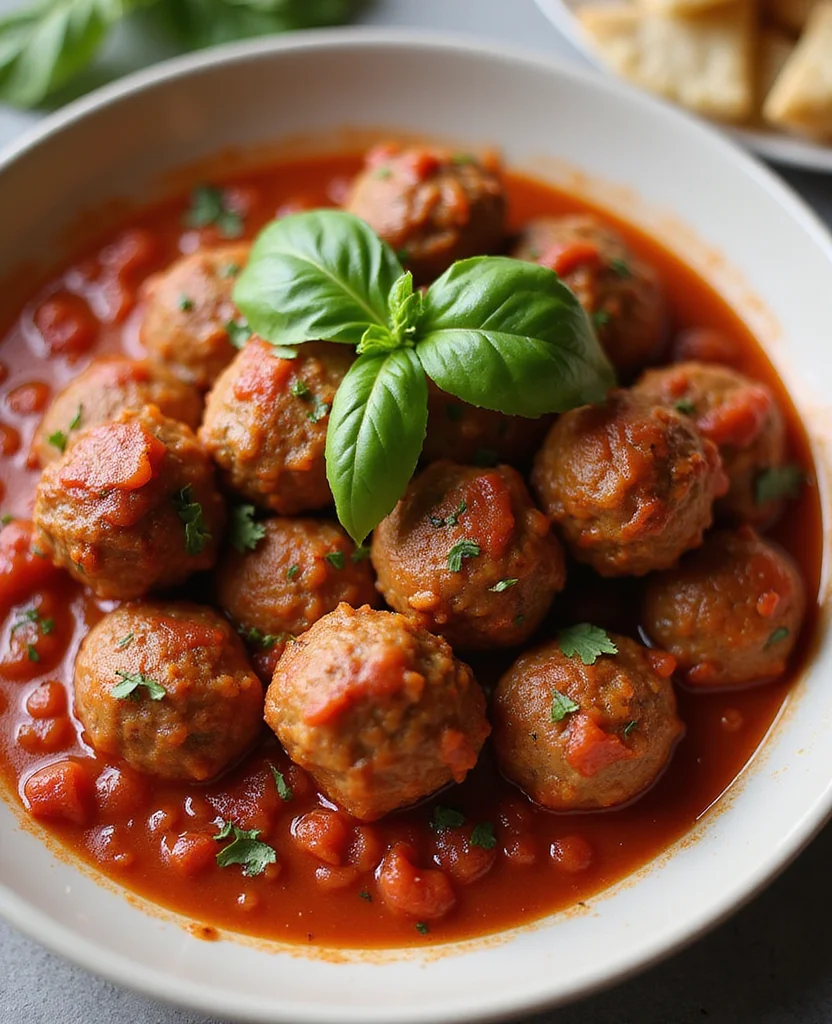
Scoop a small amount of meat mixture and roll it between your palms to form a ball.
Aim for uniform size, about the size of a golf ball, for even cooking.
Place formed meatballs on a tray lined with parchment paper.
Continue until all the mixture is used.
Step 4: Sear Meatballs

Heat a cast-iron skillet over medium-high heat and add olive oil.
Once the oil is shimmering, carefully add the meatballs in batches.
Sear each side until a crust forms, about 2-3 minutes per side.
Remove meatballs and set aside.
Step 5: Prepare Sauce Base

In the same skillet, add more olive oil if necessary, then add chopped onions.
Cook until onions are translucent, about 5 minutes.
Add minced garlic and cook for an additional minute until fragrant.
Ensure not to burn the garlic to maintain a sweet, not bitter, flavor.
Step 6: Simmer Tomato Sauce
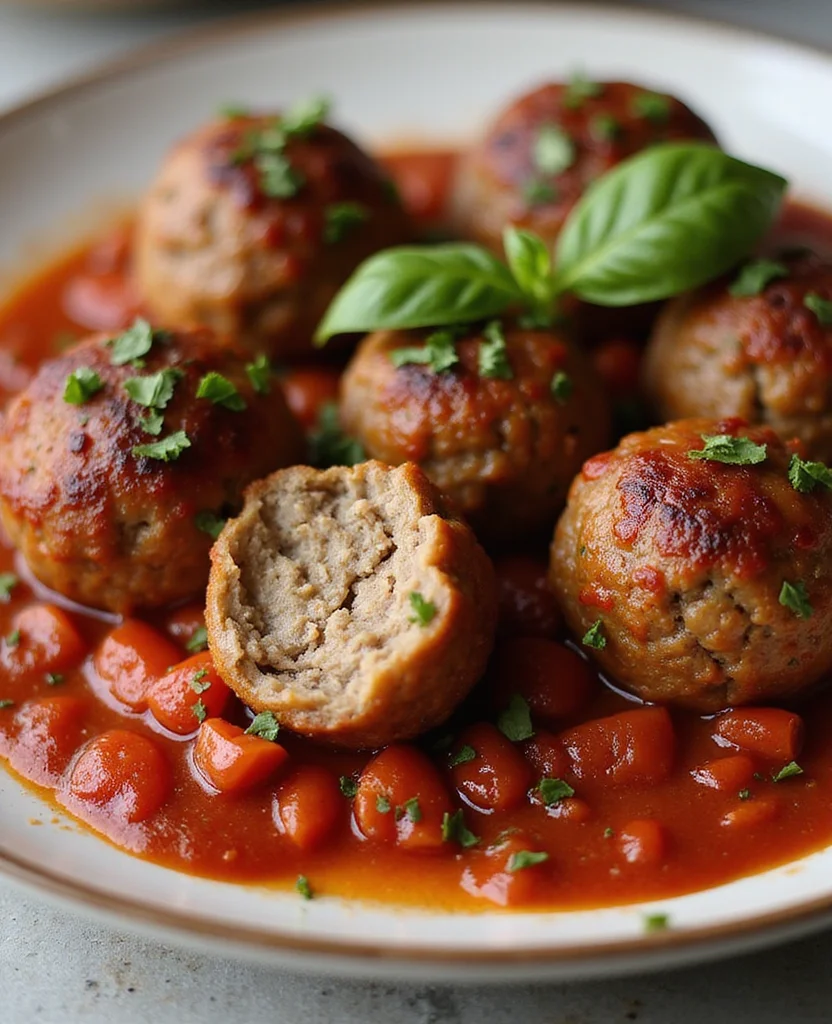
Add canned tomatoes to the skillet, stirring to lift any browned bits from the bottom.
Season with oregano and basil, stirring to combine.
Reduce heat and let the sauce simmer for 10 minutes.
Stir occasionally to prevent sticking.
Step 7: Combine Meatballs and Sauce
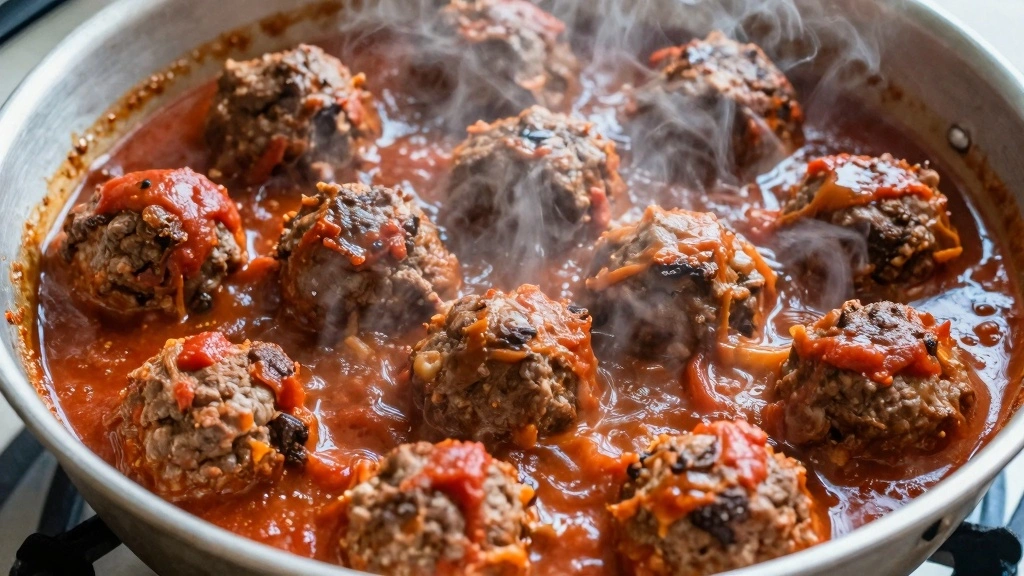
Gently place the seared meatballs into the simmering sauce.
Ensure each meatball is partially submerged in the sauce.
Cover the skillet and let simmer on low heat for 15 minutes.
The meatballs should be cooked through and tender.
Step 8: Final Touches and Serve

Uncover the skillet and taste the sauce for seasoning.
Adjust salt and pepper if necessary.
Garnish with freshly chopped parsley before serving.
Serve hot with crusty bread or over pasta.
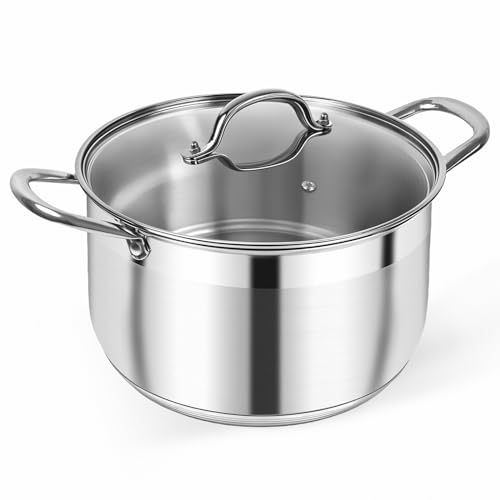



Critical Timing and Temperature Guide
Searing Meatballs: Sear each side for 2-3 minutes on medium-high heat until a crust forms. Avoid overcrowding the pan to ensure even cooking.
Simmering Sauce: Simmer the sauce at low heat for 10 minutes to meld flavors. Stir occasionally to prevent sticking or burning.
Final Simmer: Simmer meatballs in sauce for 15 minutes on low heat. Meatballs should be tender and sauce thickened; if sauce reduces too much, add a splash of water.
Pro Tips for Italian Meatballs Recipe
• Ingredient Selection: Use high-quality ground beef with a balanced fat content for juicier meatballs. Fresh herbs over dried ones can enhance flavor significantly.
• Preparation Secret: Chill the meat mixture briefly before forming meatballs to make them easier to shape and less likely to fall apart.
• Temperature Management: Bring meat to room temperature before cooking to ensure even heat distribution, preventing the exterior from overcooking before the interior is done.
• Texture Enhancement: Add a splash of milk to the breadcrumbs for extra moisture, creating a softer texture in the meatballs.
• Flavor Layering: Sear meatballs to develop a rich caramelized flavor base before simmering in sauce, adding depth to the final dish.
• Make-Ahead Strategies: Prepare and freeze uncooked meatballs on a tray, then store in a bag for up to 3 months. Thaw overnight in the refrigerator before cooking.
• Restaurant-Quality Finishing Touches: Finish with a sprinkle of freshly grated Parmesan cheese and a drizzle of high-quality olive oil just before serving.
• Equipment Optimization: If lacking a cast-iron skillet, use a heavy-bottomed pan to retain heat and achieve a similar sear.
Troubleshooting Common Issues
• Texture Too Dense: Overmixing the meat mixture can make meatballs tough. Use a gentle hand when combining ingredients, and consider adding a touch of milk to lighten the texture.
• Flavors Unbalanced: If the sauce tastes too acidic, add a pinch of sugar to balance it. Adjust salt and herbs to taste, considering the flavors will intensify as they cook.
• Meatballs Falling Apart: Insufficient binding agents can cause this. Ensure there are enough breadcrumbs and eggs in the mixture, and avoid skipping the chilling step before cooking.
• Sauce Too Thick or Thin: If the sauce reduces too much, add a splash of water or stock to loosen it. If too thin, allow it to simmer uncovered until it reaches the desired consistency.
• Burnt Garlic Flavor: Garlic cooks quickly, so add it towards the end of sautéing onions. If burnt, remove garlic pieces and add fresh minced garlic to salvage the dish.
Variations and Regional Differences
• Sicilian Style: Incorporates raisins and pine nuts into the meat mixture for a sweet and nutty twist, reflecting the island's diverse cultural influences.
• Neapolitan Style: Uses a mix of pork and beef for a richer flavor, often served with a tomato ragù and spaghetti.
• Roman Style: Known as 'Polpette al Sugo,' these are typically smaller and simmered directly in the sauce without searing first, resulting in a softer texture.
• Northern Italian Style: May include a touch of nutmeg and Parmesan in the mixture, showcasing the region's love for dairy and spice.
Food Science Behind the Recipe
• Maillard Reaction: The searing of meatballs initiates this reaction, creating complex flavors and aromas that elevate the dish.
• Emulsification: The combination of fat from the meat and eggs helps bind the mixture, preventing meatballs from falling apart during cooking.
• Acid-Base Balance: The tomatoes' acidity is balanced by the meat's richness and added herbs, creating a harmonious flavor profile.
Frequently Asked Questions
What's the most common mistake people make when preparing Italian Meatballs? Overmixing the meat mixture, which can lead to dense meatballs, is a frequent error. Mixing gently until just combined helps maintain a tender texture.
Can I use a different type of meat? Yes, you can substitute ground pork, turkey, or a mix of meats for ground beef. Adjust seasoning to complement the meat's flavor.
How do I ensure my meatballs are the same size? Use an ice cream scoop or tablespoon to portion the mixture evenly before rolling. This ensures uniform cooking.
Is it necessary to sear the meatballs? Searing adds flavor and texture but isn't mandatory. If you prefer a softer texture, you can skip this step and simmer directly in the sauce.
What can I serve with Italian Meatballs? These meatballs pair well with pasta, crusty bread, or polenta. A side salad or roasted vegetables can complement the meal.
How long can I store leftovers? Store cooked meatballs in an airtight container in the refrigerator for up to 3 days. They can be frozen for up to 3 months.
Can I make this recipe gluten-free? Substitute gluten-free breadcrumbs and ensure canned tomatoes and other ingredients are gluten-free certified.
Serving and Presentation Guide
• Traditional Presentation: Serve meatballs on a platter with a generous ladle of sauce, garnished with fresh parsley and Parmesan cheese.
• Family Style: Present in a large dish for guests to serve themselves, accompanied by a basket of fresh bread and a bottle of olive oil.
• Individual Portions: Plate three meatballs per serving over pasta, drizzled with sauce and topped with a basil leaf for a restaurant-quality look.
• Party Appetizers: Serve smaller meatballs on skewers with a side of sauce for dipping, perfect for casual gatherings or as part of an antipasto platter.



Conclusion
This authentic Italian Meatballs Recipe is a testament to the timeless appeal of classic cooking.
With rich flavors and a comforting warmth, it promises to be a favorite in your culinary repertoire.
Embrace the tradition and joy of Italian cooking by bringing this beloved dish to your table.