
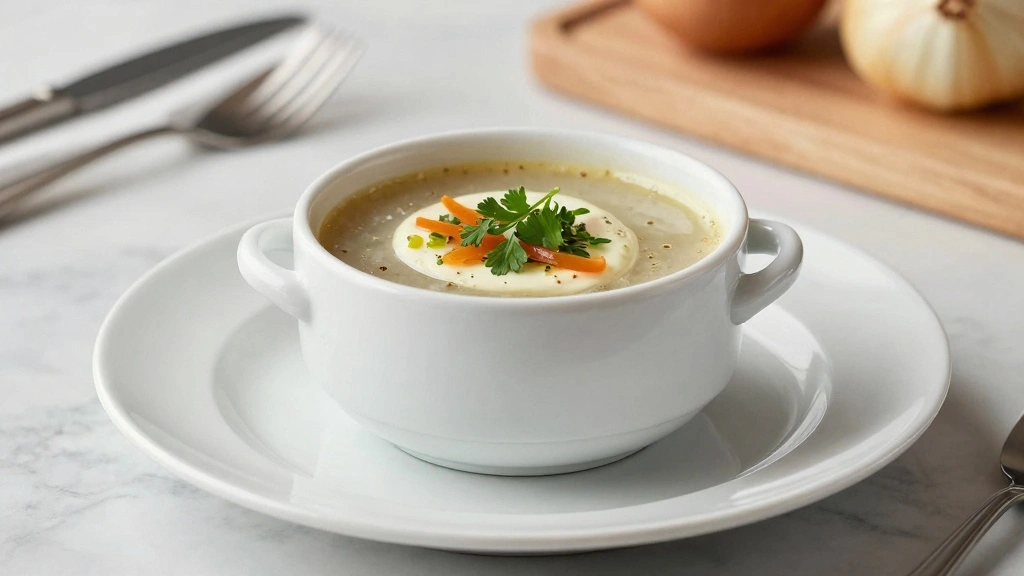
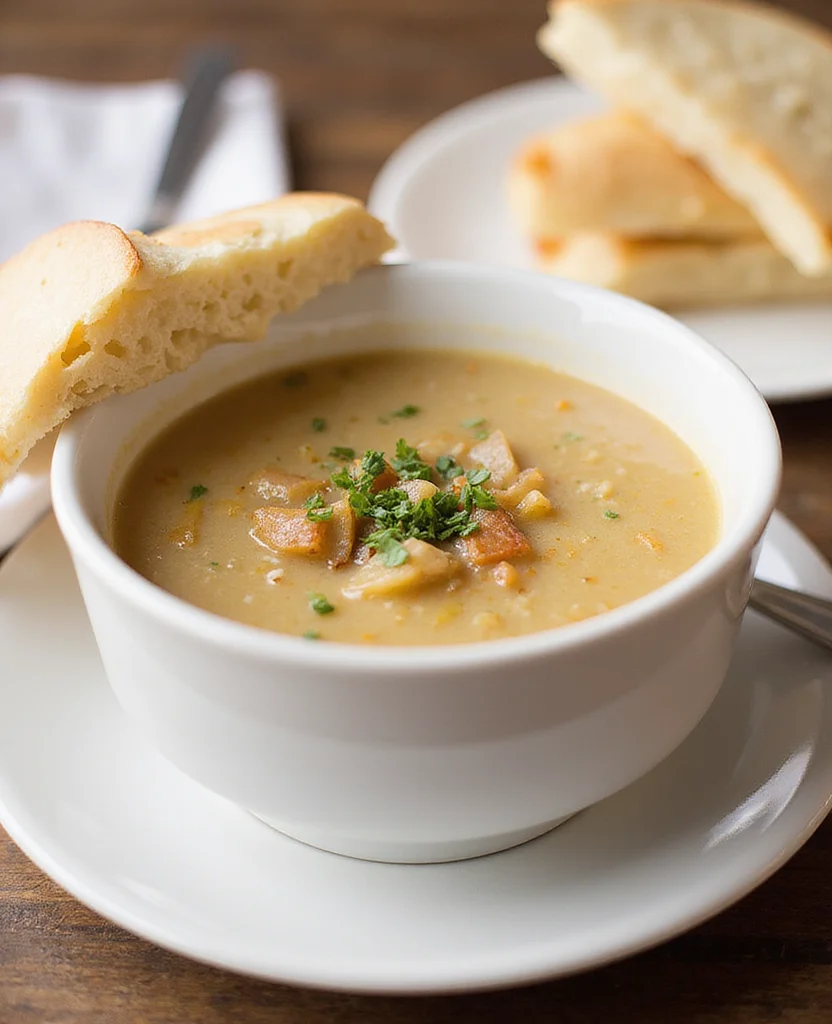
This classic French Onion Soup brings together centuries of culinary tradition with modern techniques to create a dish that’s both comforting and elegant.
The harmonious balance of caramelized onions, rich broth, and melted cheese creates a memorable dining experience that will have everyone asking for your secret.
I discovered this recipe during my travels through France, where local chefs have perfected it through generations of careful refinement.
Whether you’re preparing a casual family dinner or hosting a special celebration, this French Onion Soup delivers impressive results with straightforward preparation.
The History and Cultural Significance
• French Onion Soup traces its origins to the 18th century France, where it was originally created by resourceful chefs using leftover ingredients.
• The dish evolved over decades as techniques for caramelizing onions and making rich broth improved, eventually becoming the beloved version we know today.
• In French culture, this dish traditionally appears at family gatherings and celebrations, symbolizing warmth and hospitality.
• While many variations exist across different regions, the authentic version maintains a balance of sweet onions and savory cheese that sets it apart from imitations.


Recipe Overview
Nutritional Information (per serving)


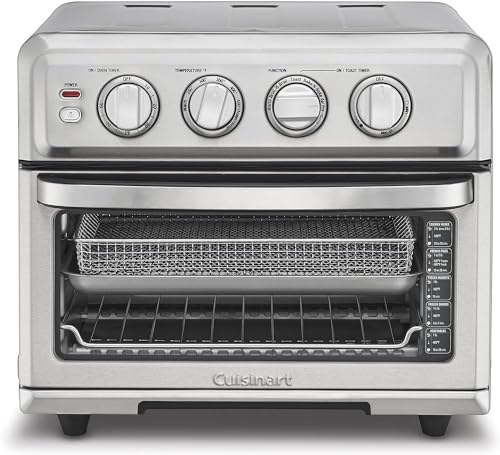
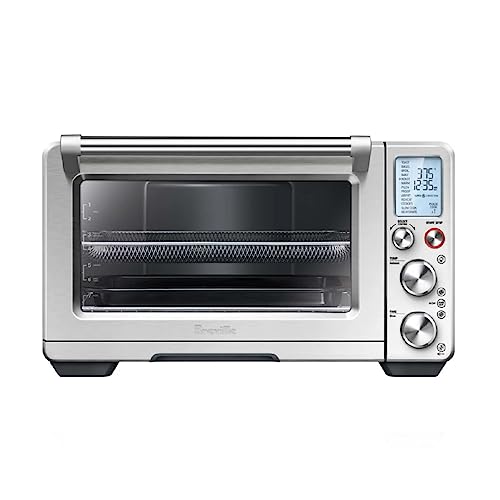
Essential Equipment Guide
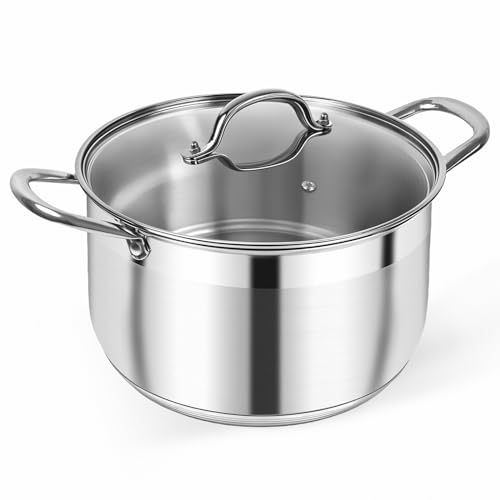
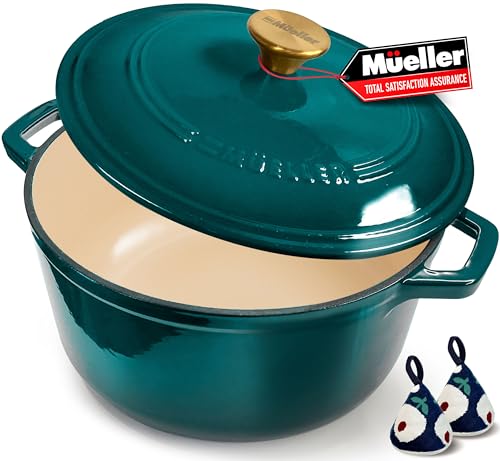
Heavy-duty pot: A heavy-duty pot is crucial for evenly caramelizing the onions without burning them. Alternatives like a cast-iron or stainless steel pot can work well, but ensure it has a thick bottom for even heat distribution.
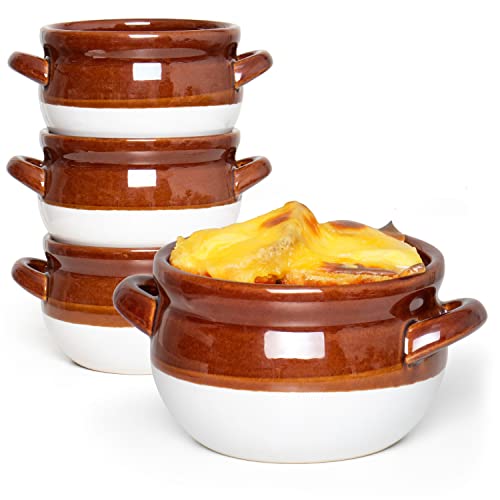
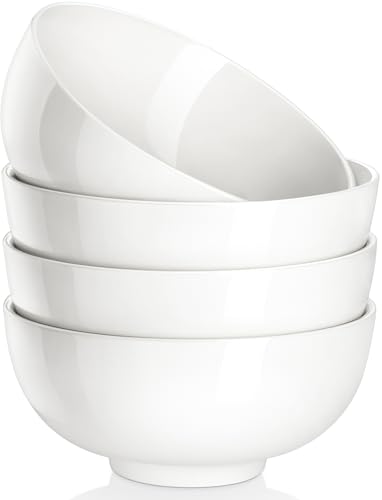
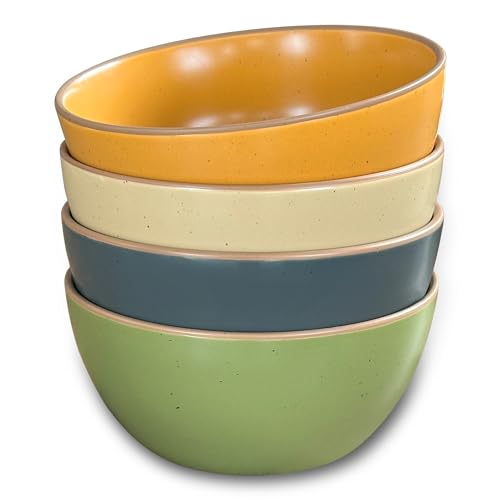
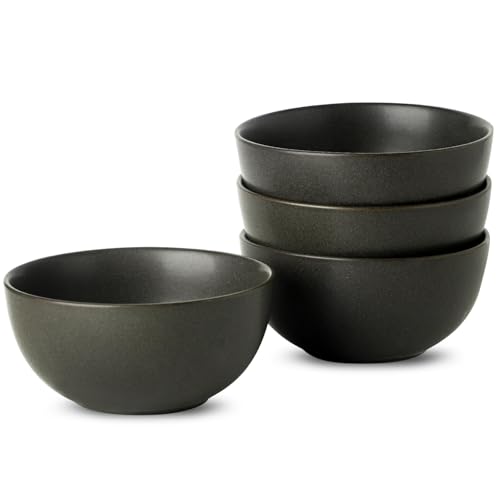
Oven-safe bowls: These are essential for achieving the classic melted cheese topping. If you don’t have these, you can use any heat-resistant bowls, but make sure they can withstand the broiler’s heat.
Cheese grater: A good cheese grater helps achieve the right texture for the cheese topping. A box grater is ideal, but a microplane can also be used for a finer texture.



Ingredients
For the Base
|
| Amount | Ingredient | Notes |
|---|---|---|
| 4 large | yellow onions | thinly sliced for sweetness |
| 2 tablespoons | butter | for caramelization |
| 1 tablespoon | olive oil | prevents burning |
For the Broth
| Amount | Ingredient | Notes |
|---|---|---|
| 4 cups | beef broth | adds depth |
| 1 cup | dry white wine | deglazes the pan |
| 1 teaspoon | sugar | enhances caramelization |
| 1 bay leaf | adds aroma |
Seasonings
| Amount | Ingredient | Notes |
|---|---|---|
| 1 teaspoon | salt | enhances overall flavor |
| 1/2 teaspoon | ground black pepper | adds warmth |
For the Topping
| Amount | Ingredient | Notes |
|---|---|---|
| 4 slices | baguette | toasted |
| 1 1/2 cups | gruyere cheese | grated, for melting |



Preparation Methods
Caramelizing Onions: Slowly cooking onions over low heat until they are deeply browned and sweet. This process is key for developing the soup's rich flavor. Stir regularly and be patient, as rushing can lead to uneven cooking.
Deglazing: Pouring wine into the hot pan to lift the caramelized bits from the bottom, enhancing flavor. Use a wooden spoon to scrape the pan and incorporate these bits into the soup.
Broiling: Placing the soup under a broiler to melt and brown the cheese topping. Keep a close eye to prevent burning, and rotate bowls as needed for even browning.



Step 1: Prepare Ingredients
Slice the onions thinly for even caramelization.
Measure all other ingredients to ensure smooth cooking.
Gather equipment like pots, bowls, and graters.
Preheat the oven if needed for toasting the bread.


Step 2: Caramelize the Onions
Heat butter and olive oil in a heavy-duty pot over medium heat.
Add the sliced onions and a pinch of salt.
Cook slowly, stirring frequently, until onions are deeply browned.
This process can take up to 40 minutes, so be patient.


Step 3: Deglaze the Pan
Once onions are caramelized, add sugar and continue to stir.
Pour in the white wine to deglaze the pan.
Scrape the bottom of the pot to lift the browned bits.
Allow the wine to reduce slightly, enhancing the soup's flavor.



Step 4: Add Broth and Simmer
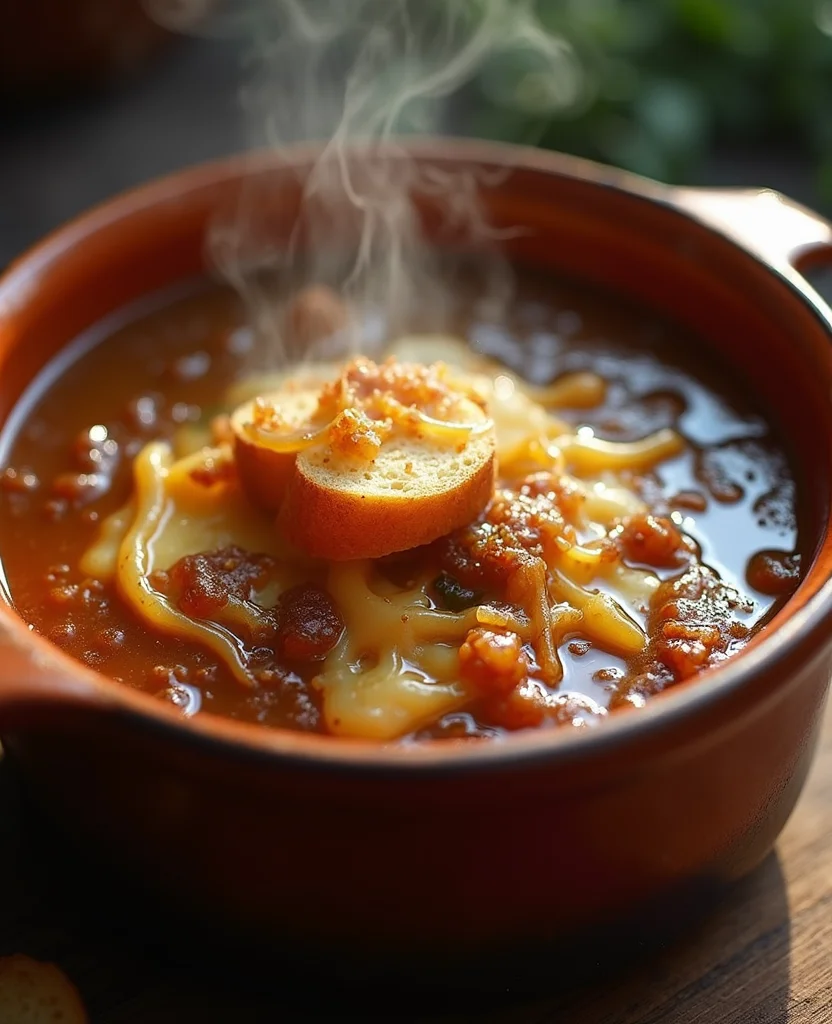
Add beef broth to the pot, stirring to combine.
Include the bay leaf for added aroma.
Bring the mixture to a gentle simmer over low heat.
Simmer for about 30 minutes to meld flavors.




Step 5: Toast the Baguette Slices
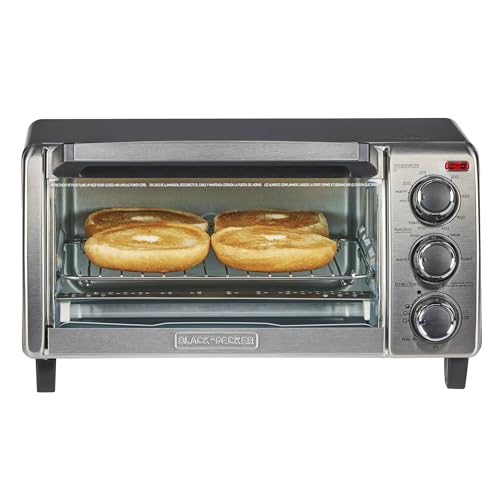
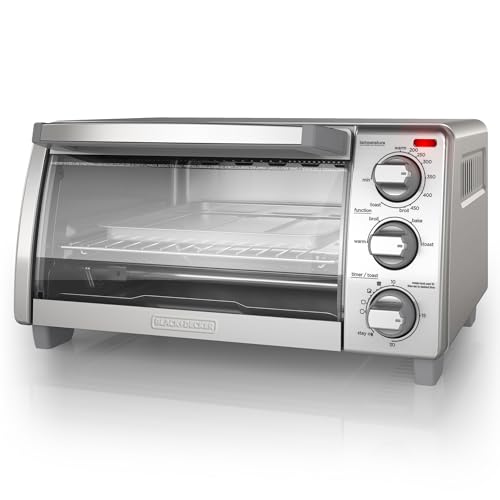
While the soup simmers, preheat the oven to 400°F (200°C).
Place baguette slices on a baking sheet.
Toast in the oven until golden brown.
Remove from oven and set aside.



Step 6: Season the Soup
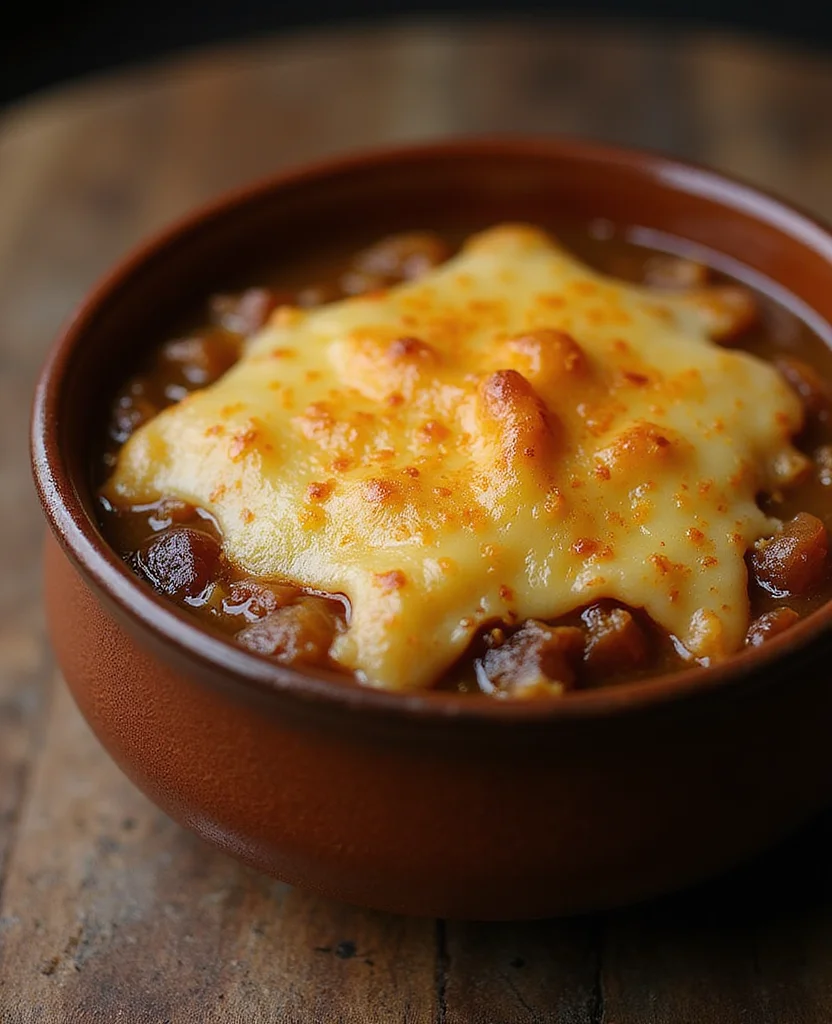
Remove the bay leaf from the pot.
Taste the soup and adjust seasoning with salt and pepper.
Stir thoroughly to distribute the spices evenly.
Keep the soup warm until ready to serve.



Step 7: Assemble the Soup Bowls
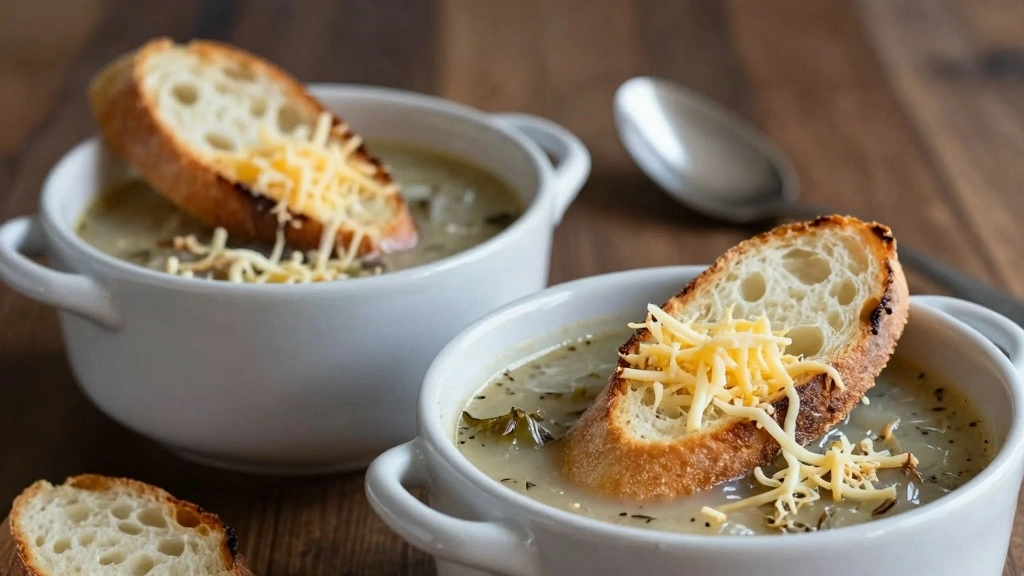
Ladle hot soup into oven-safe bowls.
Place a toasted baguette slice on top of each bowl.
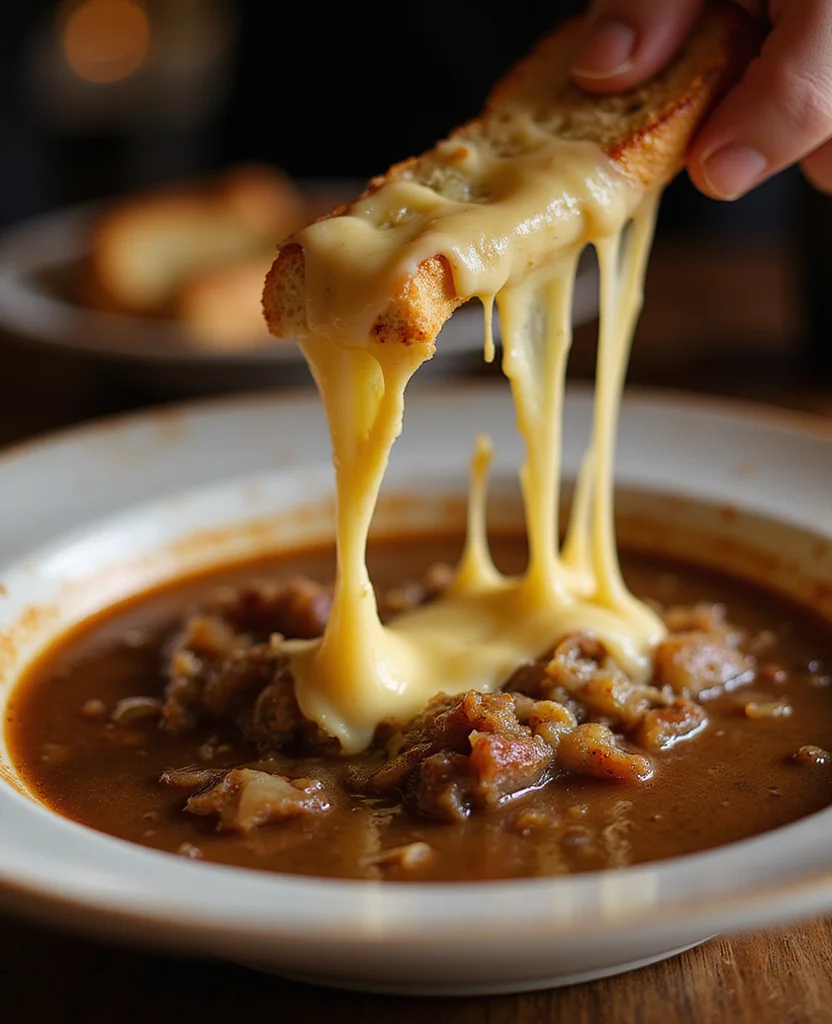
Generously sprinkle grated gruyere cheese over the bread.
Ensure cheese covers the edges for an even melt.
Step 8: Broil the Cheese
Place bowls on a baking sheet for stability.
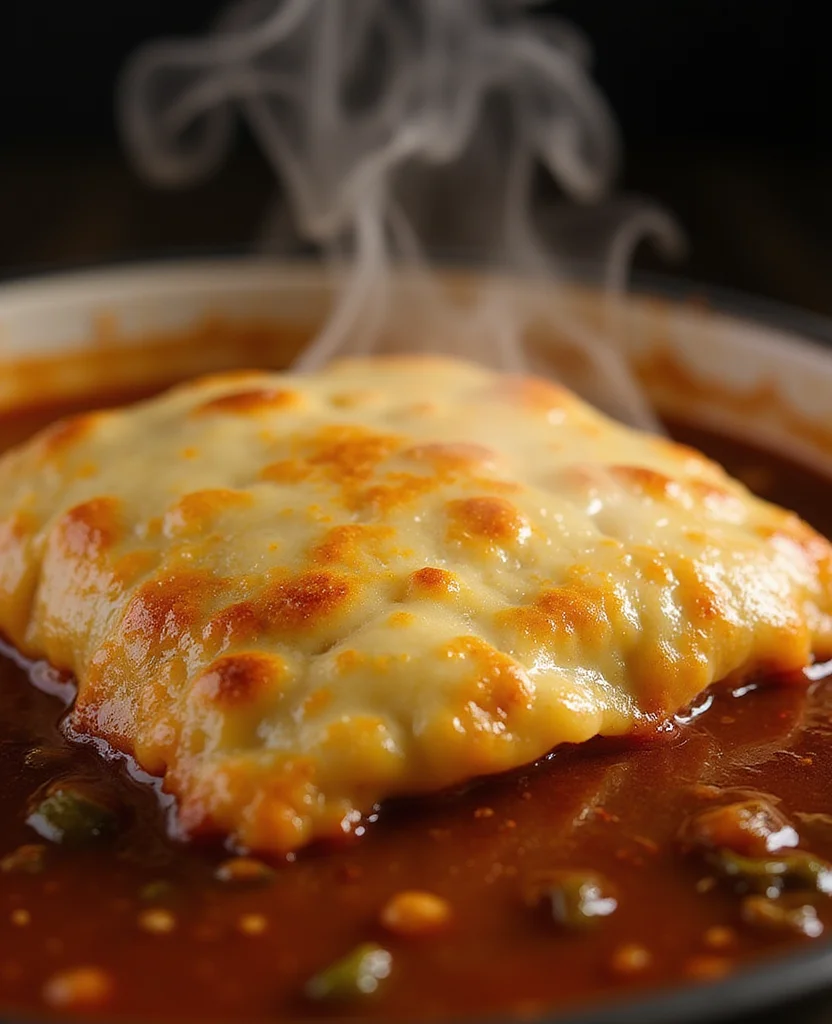
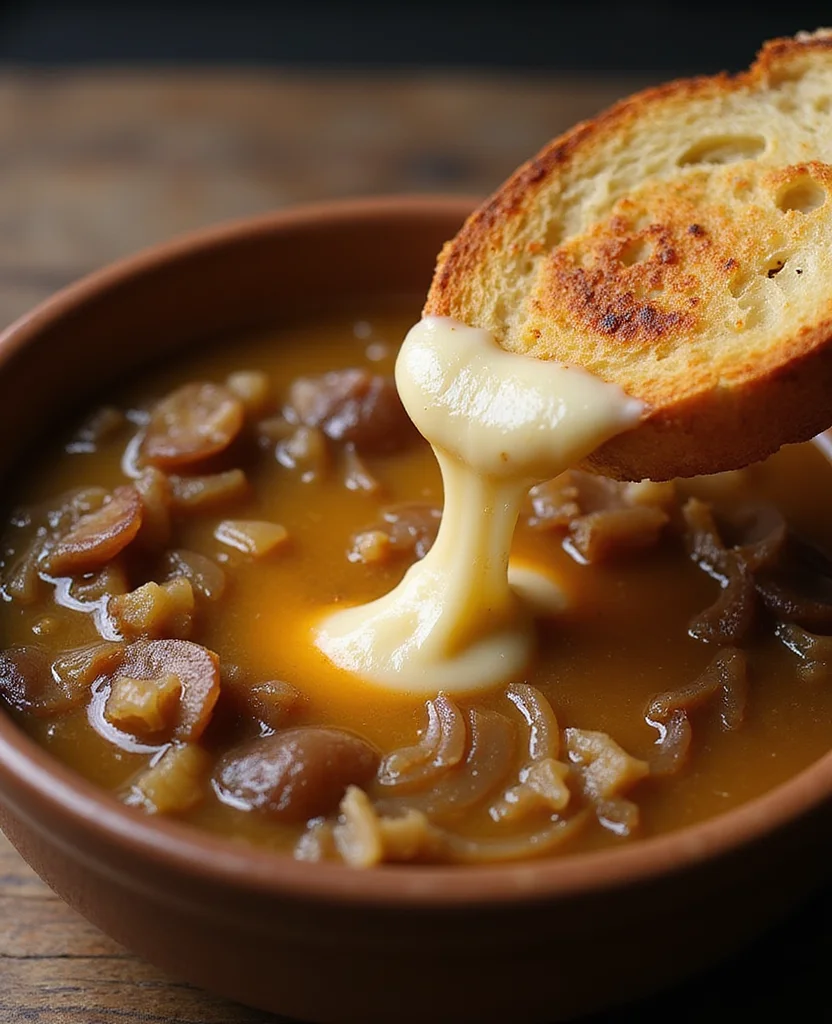
Broil in the oven until cheese is melted and bubbly.
Rotate bowls if necessary for even browning.
Carefully remove from oven and let cool slightly before serving.
Critical Timing and Temperature Guide
Caramelizing Onions: Keep heat low, around medium, and expect to spend 30-40 minutes. Onions should be golden-brown without blackened edges.
Broiling Cheese: Use high heat for 3-5 minutes. Look for bubbly, golden-brown cheese and avoid burning.
Simmering Broth: Maintain a gentle simmer for 30 minutes. Watch for a reduction in volume and intensified flavor.
Pro Tips for French Onion Soup
• Ingredient Selection: Choose sweet yellow onions for the best caramelization and Gruyere cheese for authentic flavor.
• Preparation Secret: Adding a pinch of sugar to onions helps accelerate caramelization without compromising flavor.
• Temperature Management: Keep a steady low heat when caramelizing onions to prevent burning and ensure even cooking.
• Texture Enhancement: Use a combination of butter and oil to achieve a silky texture in the onions.
• Flavor Layering: Deglaze with wine and scrape the pan well to incorporate all caramelized bits into the soup.
• Make-Ahead Strategies: Prepare the soup base a day ahead, refrigerate, and reheat before serving to deepen flavors.
• Restaurant-Quality Finishing Touches: Garnish with fresh thyme or parsley for added color and aroma.
• Equipment Optimization: Use an immersion blender to quickly incorporate any unmelted cheese into the soup if needed.




Troubleshooting Common Issues
• Onions Burned: Caused by too high heat or insufficient stirring. To fix, reduce heat and stir more frequently. If burned, start a new batch of onions.
• Cheese Not Melting: May occur if cheese is too thick or oven not hot enough. Grate cheese finely and ensure broiler is preheated.
• Soup Too Salty: Result of over-seasoning or reduced broth. Add more broth or a splash of water to dilute.
• Flavors Unbalanced: Often due to missing deglazing step. Ensure to deglaze properly and adjust seasoning to taste.
• Bread Soggy: Can happen if bread is not toasted enough. Ensure baguette slices are thoroughly toasted before adding to soup.
Variations and Regional Differences
• Parisian Style: Uses a mix of beef and chicken broth for a lighter flavor profile, often served with Emmental cheese.
• Provencal Variation: Includes herbs like thyme and rosemary in the broth, offering a fragrant twist.
• Alsatian Version: Adds German influences by incorporating a splash of apple cider for a sweet note.
• American Adaptation: Sometimes uses mozzarella for a stretchier cheese topping and includes Worcestershire sauce for depth.
Food Science Behind the Recipe
• Caramelization: The Maillard reaction in onions transforms sugars into complex flavors, crucial for the soup's depth.
• Emulsification: The combination of butter and oil creates a stable base for the soup, enhancing texture.
• Protein Denaturation: Broiling cheese causes proteins to unfold and reconfigure, forming the bubbly, golden crust.
Frequently Asked Questions
What's the most common mistake people make when preparing French Onion Soup? Rushing the caramelization process is a common mistake; patience is key for developing the soup's rich flavor.
Can I use a different type of onion? Yes, but yellow onions are preferred for their natural sweetness and caramelization properties.
Is it possible to make this soup vegetarian? Yes, substitute beef broth with vegetable broth for a vegetarian version.
How can I store leftovers? Store cooled soup in an airtight container in the refrigerator for up to three days.
Can I freeze French Onion Soup? Yes, freeze without the bread and cheese topping. Thaw and reheat before serving.
What wine works best for deglazing? A dry white wine like Sauvignon Blanc or Chardonnay complements the flavors well.
How do I prevent the cheese from burning? Keep an eye on the broiler and rotate the bowls to ensure even browning.
Serving and Presentation Guide
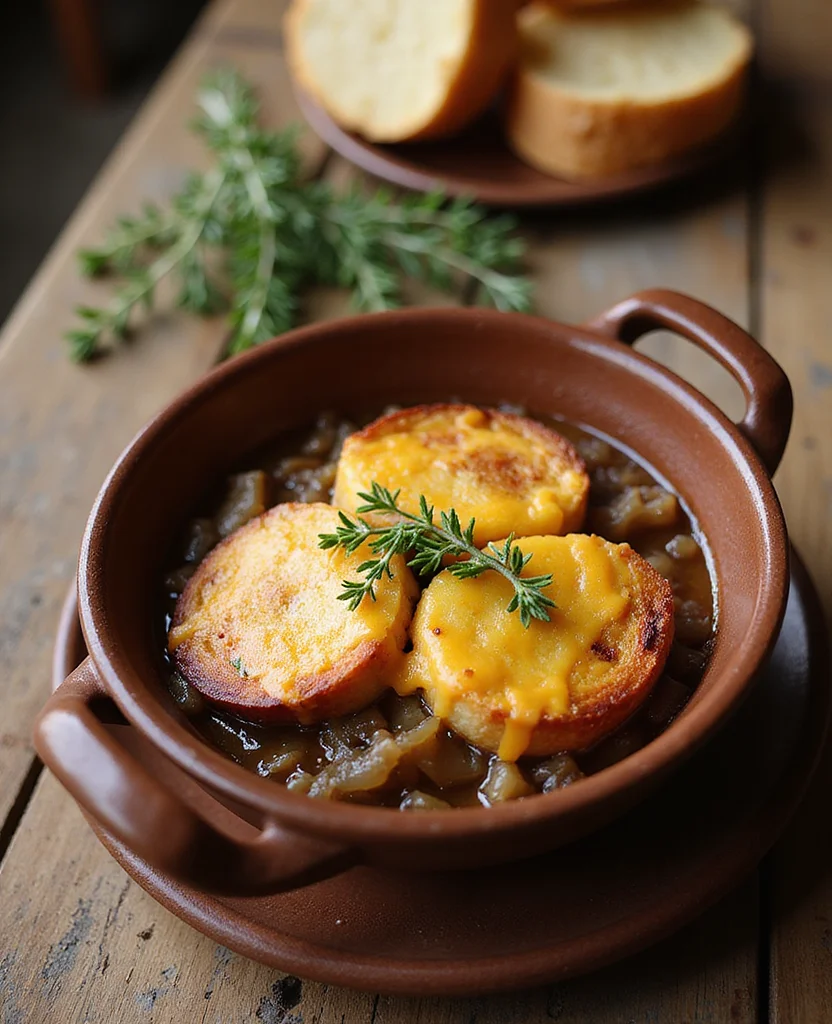
• Traditional Presentation: Serve in rustic, oven-safe bowls with cheese bubbling over the edges.
• Contemporary Twist: Use individual cast-iron skillets for a unique presentation.
• Garnishing Ideas: Add a sprig of fresh thyme or a sprinkle of finely chopped parsley for color and aroma.
• Pairing Suggestions: Accompany with a crisp green salad and a glass of the same wine used in the soup.
Conclusion
Now that you're equipped with the secrets to making the perfect French Onion Soup, it's time to get cooking.
Enjoy this timeless dish that brings warmth and elegance to any meal.
Don't hesitate to experiment with variations and make it your own.